

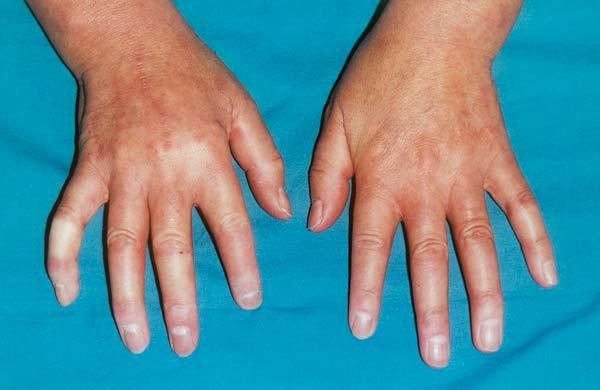
Systemic sclerosis, also called scleroderma, is an autoimmune disease that can affect the skin, blood vessels, digestive system, lungs, heart, and kidneys.
For many people, the first signs are subtle. You may notice fingers that turn white or blue in the cold, puffy hands, or skin on the fingers that slowly becomes tighter.
Recognizing these changes early is important because systemic sclerosis can sometimes affect internal organs before symptoms become obvious.
Key Signs to Know
Raynaud’s phenomenon: Fingers turn white, blue or purple, and then red, especially with cold exposure.
Puffy or swollen fingers: This can be an early sign before skin tightening develops.
Sclerodactyly: The skin of the fingers becomes tight, thick, shiny, or difficult to move.
Fingertip problems: Painful sores, pits, scars, or poor circulation can occur.
Other organs may be affected: Your rheumatologist may recommend lung, heart, kidney, and blood-pressure monitoring even if you feel well.
What Is Systemic Sclerosis?
Systemic sclerosis is an autoimmune connective tissue disease. The immune system becomes overactive, small blood vessels can become abnormal, and the body may produce too much collagen.
Collagen normally gives structure to the skin and other tissues. Too much collagen can cause fibrosis, which means thickening or scarring.
This can affect the skin as well as internal organs.
Not everyone develops the same symptoms or complications. Some people have mild disease for many years, while others need closer monitoring and treatment.
Raynaud’s Phenomenon Is Often an Early Sign
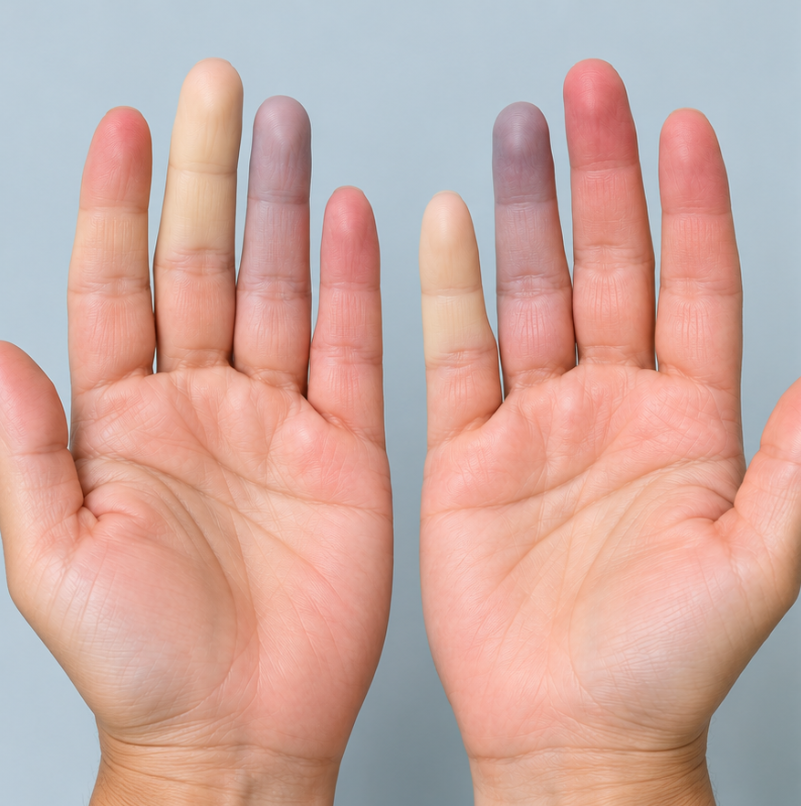
Raynaud’s Phenomenon
Raynaud’s phenomenon happens when small blood vessels in the fingers temporarily narrow and reduce blood flow.
During an episode, the fingers may:
Turn white.
Become blue or purple.
Turn red as circulation returns.
Feel cold, numb, tingling, painful, or throbbing.
Cold temperatures are a common trigger. Emotional stress and sudden temperature changes can also trigger an episode.
Does Raynaud’s mean I have systemic sclerosis?
No. Raynaud’s is common, and most people with Raynaud’s do not have systemic sclerosis.
We become more concerned when Raynaud’s occurs along with:
Puffy or swollen fingers.
Tightening skin.
Fingertip sores.
Abnormal blood vessels around the fingernails.
Certain autoimmune antibodies.
New Raynaud’s that begins during adulthood, especially when accompanied by these other changes, may deserve a rheumatology evaluation.
What Is Sclerodactyly?
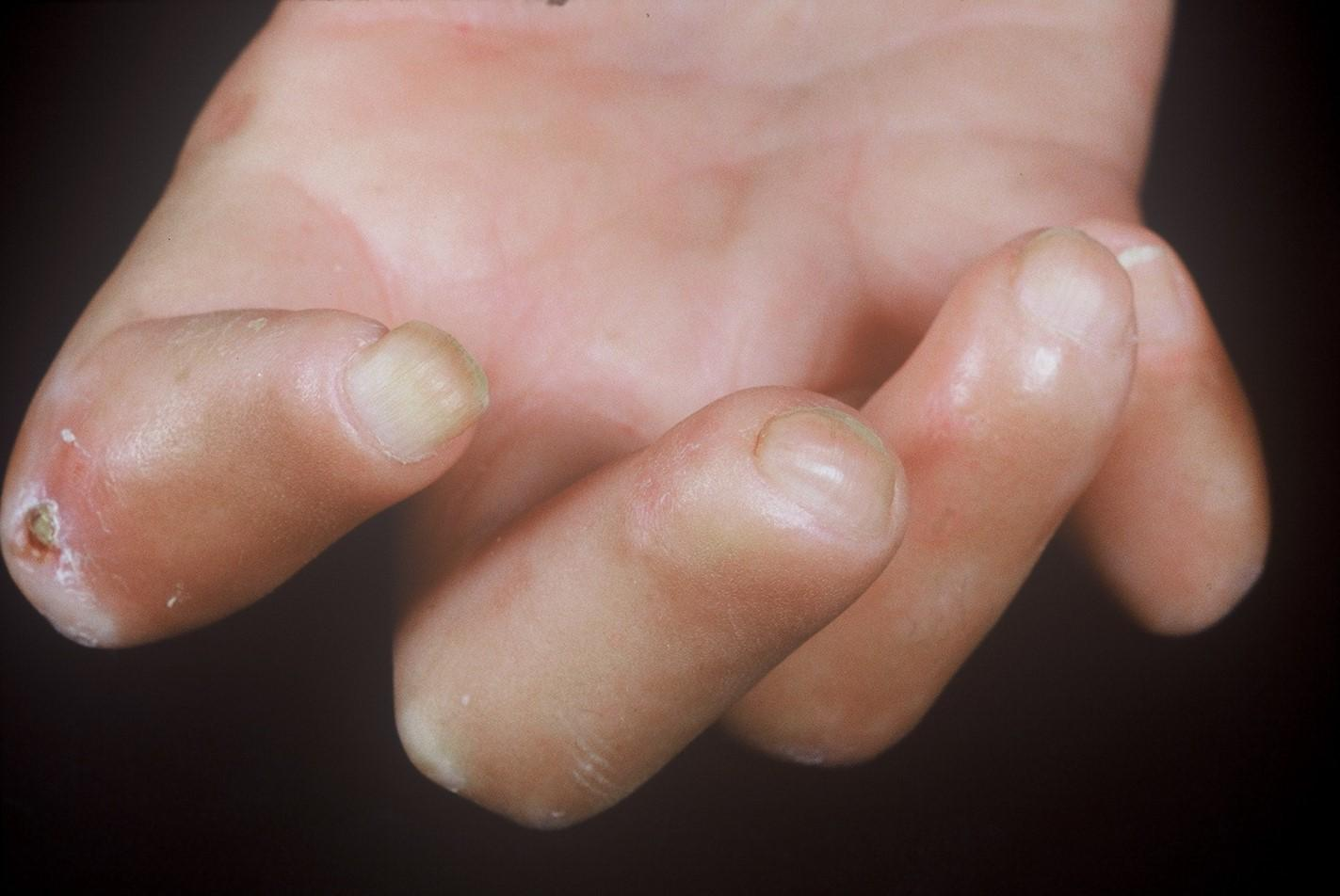
Sclerodactyly
Sclerodactyly means thickening and tightening of the skin of the fingers.
Early in systemic sclerosis, the fingers may first appear puffy or swollen. Over time, the skin may become tighter, firmer, or shiny.
You may notice:
Tight or shiny skin.
Difficulty making a fist.
Reduced finger movement.
Fingers that stay slightly bent.
Difficulty gripping or pinching objects.
Cracks or sores around the fingertips.
Small pits or scars on the fingertips.
These changes can happen gradually.
Keeping the hands warm, protecting the skin, stretching the fingers, and treating the underlying disease can help preserve hand function.
Other Skin Changes
Systemic sclerosis may also cause:
Puffy hands: Swelling may appear before the skin becomes tight.
Telangiectasias: Small red spots caused by widened blood vessels, often on the hands or face.
Calcinosis: Firm calcium deposits underneath the skin.
Digital ulcers: Painful sores, usually near the fingertips, caused by poor circulation.
Limited vs. Diffuse Systemic Sclerosis
There are two main patterns of systemic sclerosis.
A. Limited Cutaneous Systemic Sclerosis
Skin tightening usually stays around areas such as the:
Fingers and hands.
Forearms.
Lower legs.
Face.
Some people may have heard the term CREST syndrome:
Calcinosis
Raynaud’s phenomenon
Esophageal problems
Sclerodactyly
Telangiectasias
Even with limited disease, internal organs can still be affected.
B. Diffuse Cutaneous Systemic Sclerosis
Skin thickening may extend farther up the arms or legs and sometimes involve the chest, abdomen, or other areas.
Diffuse disease can be associated with a greater risk of certain internal-organ complications, particularly during the earlier years of the disease.
However, the amount of skin involvement alone does not determine how severe systemic sclerosis will be.
Systemic Sclerosis and the Lungs
The lungs are especially important to monitor because lung disease can sometimes develop before you notice symptoms.
Two major lung problems can occur.
A. Interstitial Lung Disease (ILD)
Interstitial lung disease causes inflammation and scarring within the lungs.
Symptoms may include:
Shortness of breath with activity.
Persistent dry cough.
Decreased ability to exercise.
Some people with early ILD have no symptoms.
Your rheumatologist may recommend pulmonary function tests and, when appropriate, a high-resolution CT scan of the chest.
B. Pulmonary Arterial Hypertension (PAH)
Systemic sclerosis can also affect the blood vessels inside the lungs.
Possible symptoms include:
Shortness of breath.
Fatigue.
Lightheadedness.
Chest discomfort.
Reduced exercise tolerance.
Because early pulmonary hypertension may not cause obvious symptoms, screening is an important part of ongoing care.
Heartburn and Swallowing Problems
The esophagus—the tube that carries food from your mouth to your stomach—is commonly affected by systemic sclerosis.
You may notice:
Heartburn.
Acid reflux.
Food feeling stuck.
Trouble swallowing.
Coughing after eating or while lying down.
Bloating.
Feeling full quickly.
Treatment may include acid-reducing medication, changes in eating habits, or additional gastrointestinal testing depending on your symptoms.
Why Blood Pressure Matters
A rare but serious complication called scleroderma renal crisis can cause a sudden increase in blood pressure and rapid worsening of kidney function.
Some people may be asked to monitor their blood pressure at home.
Corticosteroids such as prednisone are generally used cautiously in systemic sclerosis because higher doses can increase the risk of renal crisis in susceptible patients.
Contact your medical team promptly if your blood pressure suddenly becomes much higher than usual.
How Is Systemic Sclerosis Diagnosed?
There is no single blood test that can diagnose systemic sclerosis by itself.
Your rheumatologist looks at the entire picture, which may include:
Raynaud’s phenomenon.
Puffy or swollen fingers.
Sclerodactyly.
Fingertip sores or pits.
Telangiectasias.
Changes in the tiny blood vessels around the fingernails.
Autoimmune blood tests.
Lung or other organ findings.
Your rheumatologist may examine the small blood vessels around your fingernails using magnification. This is called nailfold capillaroscopy.
Blood testing may include an ANA (antinuclear antibody) and more specific systemic sclerosis antibodies.
A positive antibody does not automatically mean you have systemic sclerosis. Blood-test results need to be interpreted together with your symptoms and physical examination.
What Tests May Be Needed?
Because systemic sclerosis can sometimes affect organs before you feel symptoms, regular monitoring is important.
Depending on your individual condition, testing may include:
Blood-pressure monitoring.
Kidney-function blood tests.
Urine tests.
Pulmonary function tests.
High-resolution CT scan of the lungs when needed.
Echocardiogram to evaluate the heart and screen for pulmonary hypertension.
Blood tests.
Examination of the skin and fingers.
Additional heart or gastrointestinal testing when needed.
Your rheumatologist will determine which tests you need and how often they should be repeated.
Can Systemic Sclerosis Be Treated?
Yes.
There is currently no single medication that cures systemic sclerosis, but many of its complications can be treated.
Treatment is based on which parts of the body are affected.
Raynaud’s: Keeping the entire body warm is important. Medications that improve blood flow may be used when attacks are frequent or severe.
Digital ulcers: More aggressive treatment to improve circulation may be needed when fingertip sores develop.
Skin disease: Medications that control the immune system may be used when skin thickening is active or progressing.
Interstitial lung disease: Treatment may include medications that control immune-system activity and, in selected patients, medications that slow lung scarring.
Acid reflux: Acid-reducing medications and lifestyle changes are commonly used.
Pulmonary hypertension: Specialized medications are available to lower pressure in the blood vessels of the lungs.
Scleroderma renal crisis: This requires urgent treatment.
There is no single treatment plan that is appropriate for everyone with systemic sclerosis.
What Can I Do at Home?
Keep Warm
For Raynaud’s, warming your whole body can be as important as warming your hands.
Consider:
Dressing in layers.
Wearing gloves and warm socks.
Keeping your home comfortably warm.
Wearing gloves when reaching into the refrigerator or freezer.
Avoid Smoking and Nicotine
Nicotine narrows blood vessels and can make Raynaud’s and poor fingertip circulation worse.
Protect Your Hands
Use moisturizer regularly and protect your fingers from cuts, cracking, and repeated injury.
Pay attention to small wounds because poor circulation can make them slower to heal.
Keep Your Hands Moving
Gentle hand and finger stretching can help maintain movement when the skin becomes tight.
Manage Acid Reflux
If you have reflux:
Eat smaller meals.
Avoid lying down immediately after eating.
Take prescribed reflux medication as directed.
When Should I Call My Rheumatologist?
Contact your rheumatology office promptly if you develop:
A new painful fingertip sore or ulcer.
Increasing redness, drainage, or swelling around a finger.
Severe finger pain that does not improve with warming.
Persistent blue or purple discoloration.
Signs of infection.
A finger that remains severely discolored or begins turning black may not be receiving enough blood and requires urgent medical evaluation.
When Is It an Emergency?
Seek urgent medical attention for:
Rapidly worsening shortness of breath.
Chest pain.
Fainting.
A sudden major increase in blood pressure, especially with severe headache, vision changes, confusion, chest symptoms, or shortness of breath.
A finger or toe that remains severely blue, purple, or black.
A severely painful or infected fingertip ulcer.
These symptoms should not wait for a routine appointment.
Why Seeing a Rheumatologist Early Matters
Systemic sclerosis can sometimes affect the body before you feel sick.
For example:
Early lung disease may occur without noticeable shortness of breath.
Pulmonary hypertension may develop before symptoms become obvious.
Kidney problems may first appear as a change in blood pressure.
Systemic sclerosis care is therefore about more than treating tight skin or cold fingers. Regular monitoring helps identify complications earlier, when they may be easier to manage.
Frequently Asked Questions
Is systemic sclerosis the same as scleroderma?
The terms are often used interchangeably. Scleroderma means “hard skin” and can refer to several conditions. Systemic sclerosis is the autoimmune disease that can affect both the skin and internal organs.
Does everyone with Raynaud’s have systemic sclerosis?
No. Most people with Raynaud’s do not have systemic sclerosis.
Raynaud’s becomes more concerning when it occurs with puffy or tight fingers, fingertip sores, abnormal blood vessels around the nails, or certain autoimmune antibodies.
Should I see a rheumatologist for Raynaud’s?
Not everyone with Raynaud’s needs a rheumatologist. However, an evaluation may be appropriate when Raynaud’s begins in adulthood or occurs with puffy fingers, skin tightening, fingertip ulcers, abnormal autoimmune blood tests, or other symptoms suggesting an autoimmune disease.
Can systemic sclerosis affect my lungs even if I feel fine?
Yes. Early interstitial lung disease or changes in the blood vessels of the lungs may cause few or no symptoms. This is why lung screening is an important part of systemic sclerosis care.
Is systemic sclerosis curable?
There is currently no single cure for systemic sclerosis. However, many of its manifestations can be treated, and careful monitoring can help detect complications earlier.
Does systemic sclerosis always get worse?
No. Systemic sclerosis varies considerably from person to person. Some problems may stabilize or improve, while others need treatment and ongoing monitoring.
Are tight fingers reversible?
Early swelling may improve. Established skin thickening can take longer to improve, and some stiffness may remain. Treatment of active disease, hand exercises, skin protection, and good circulation are important for maintaining function.
What blood tests diagnose systemic sclerosis?
There is no single blood test that can diagnose systemic sclerosis. ANA and more specific autoimmune antibodies can provide useful information, but results must be considered together with your symptoms and physical examination.
What kind of doctor treats systemic sclerosis?
A rheumatologist usually leads the evaluation and treatment of systemic sclerosis. Depending on which organs are affected, your rheumatologist may also work with pulmonologists, cardiologists, gastroenterologists, or other specialists.
Systemic Sclerosis Care in Whittier
If you have unexplained Raynaud’s phenomenon, puffy or tightening fingers, fingertip sores, or abnormal autoimmune blood tests suggesting possible scleroderma, a rheumatology evaluation can help determine whether systemic sclerosis is present and whether additional testing is appropriate.
Amicus Arthritis & Osteoporosis Center is an independent rheumatology practice at 12456 Washington Blvd in Whittier, serving patients from El Monte, Temple City, Alhambra, Rowland Heights, Diamond Bar, Montebello, Pico Rivera, Downey, Santa Fe Springs, Norwalk, and surrounding communities.
We accept Medicare and most PPO, HMO, and IPA plans. Our staff can verify your insurance benefits before treatment.
Our rheumatologists see patients in English, and several also see patients in Spanish, Mandarin, or Farsi.
Call (562) 758-6600 to request a rheumatology appointment.
This article is for general educational purposes and does not replace personalized medical advice. Seek urgent medical evaluation for rapidly worsening shortness of breath, chest pain, fainting, a sudden significant rise in blood pressure, or a finger or toe that remains severely blue, purple, or black.