

What Does Gout Feel Like? Symptoms, Look-Alikes, and How a Rheumatologist Confirms It
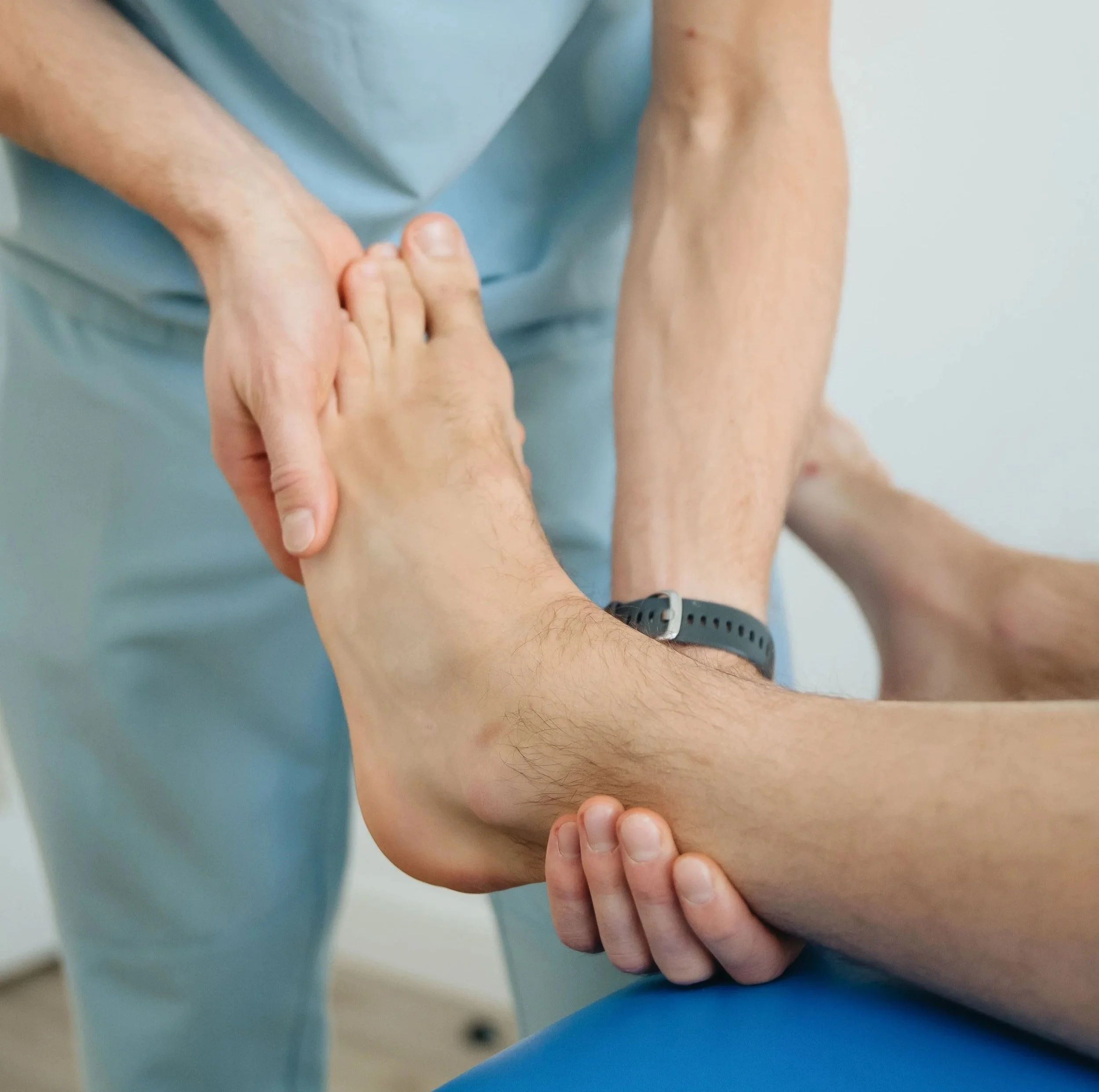
A rheumatologist confirms gout by examining the joint and, when needed, testing the joint fluid for urate crystals.
What does gout feel like? Most people describe it the same way: pain that arrives suddenly, often in the middle of the night, in one joint, usually the big toe, and builds within hours to a level where the weight of a bedsheet is unbearable. The joint turns red, hot, and swollen. If that sounds like what you are feeling right now, this article walks through the signs, the conditions that get mistaken for gout, what to do tonight, and how a rheumatologist confirms the diagnosis so it can be treated properly. If you have a fever, chills, or redness spreading up your leg, skip ahead to when to go to urgent care or the emergency room.
What does gout feel like? The classic first attack
A first gout attack rarely creeps in. It tends to start abruptly, frequently between midnight and morning, and reaches its worst within roughly the first day. Patients use words like burning, throbbing, crushing, and stabbing. The joint is exquisitely tender, so much so that a sock, a sheet, or the vibration of someone walking across the room can be intolerable. The skin over the joint is red or purplish, shiny, tight, and warm to the touch, and the swelling can make the joint look twice its size.
Movement is severely limited, mostly by pain. Some people feel run down or have a low-grade fever, but any fever with a hot, swollen joint should be checked the same day to rule out infection. Over the following days the pain shifts from sharp to aching, the redness fades, and the skin may peel or itch as the swelling goes down. The Mayo Clinic and Cleveland Clinic describe this same pattern: sudden onset, one joint, intense pain, redness and warmth, and lingering discomfort after the peak.
What gout feels like in the foot, ankle, knee, and hands
In the foot, gout most often strikes the joint at the base of the big toe, where the toe meets the foot. Doctors call this podagra. The pain sits in that knuckle, not the tip of the toe, and pushing the toe upward is agonizing. Gout can also hit the midfoot, where it feels like a deep bruise across the top or instep, and the ankle, where it mimics a bad sprain without any injury to explain it.
In the knee, gout produces a hot, tight, swollen joint that will not bend fully and may feel like it is full of fluid. In the hands, wrists, and elbows, more common in people who have had gout for years, it can look like a sudden, painful swelling of a finger joint or a red, painful lump at the elbow. Later in the disease, firm chalky deposits called tophi can appear under the skin on the fingers, elbows, the Achilles tendon, or the outer ear. Gout in the hands can also be an early sign in older women, particularly those taking water pills.
The first signs of gout, before the big attack
Some people get a warning. A day or two before a full flare, the joint may feel warm, tingly, stiff, or faintly sore, a sensation patients often describe as the joint feeling different rather than painful. Many also recall earlier, milder episodes they wrote off as a bruise, a tight shoe, or a sprain that healed on its own in a few days. Those were probably small gout attacks.
If you have had that pattern, especially with risk factors like high uric acid on a blood test, being male, having gone through menopause, obesity, diabetes, kidney disease, high blood pressure, heavy alcohol use, diuretic or low-dose aspirin use, or a family history of gout, it is worth seeing a doctor before the next flare rather than after. Women get gout too, especially after menopause, and their symptoms are often dismissed. A high uric acid level on its own, with no symptoms, usually is not treated. The Centers for Disease Control and Prevention lists the major risk factors.
What else can be mistaken for gout?
Several conditions produce a hot, swollen, painful joint, and some of them are dangerous to treat as gout. Gout and an infection can also occur in the same joint at the same time. In someone with diabetes and nerve damage, a hot, swollen, red foot can be Charcot foot, which needs its own urgent assessment. This is the main reason a first attack deserves a proper diagnosis rather than a guess.
Septic arthritis (joint infection): Looks almost identical, often with fever, chills, or feeling ill. A medical emergency. Only joint fluid testing reliably tells the two apart.
Pseudogout (CPPD): A different, calcium-based crystal, more often in the knee or wrist and in older adults. Uric acid medication does not help it.
Cellulitis: Skin infection. Redness spreads beyond the joint and the joint itself usually moves without deep pain, though gout's redness can spread too, so the two can be hard to tell apart without an exam.
Bunion flare or bursitis: Pain over a bony bump at the big toe that has been there for years, usually milder and slower to build.
Stress fracture: Pain after an increase in activity, tender over bone rather than the joint, little redness.
Rheumatoid arthritis: Usually several joints, both sides of the body, morning stiffness lasting an hour or more, not a single overnight explosion.
Psoriatic arthritis: Often only a few joints and often on one side. It can cause a single swollen, sausage-shaped toe, called dactylitis, that looks a lot like gout.
Sprain: Follows an injury. Gout often strikes with no injury at all, though a minor bump can sometimes set off a flare.
Normal uric acid, still gout. A normal uric acid level does not rule out gout. During a flare, blood uric acid can read normal or even low. This is a common source of confusion. Uric acid is best rechecked about two to four weeks after a flare settles. Rheumatologists read the number alongside the exam, the history, and, when needed, the joint fluid.
Hot, swollen joint and not sure if it is gout? We confirm the diagnosis on-site when needed, treat the attack, and start the plan that prevents the next one. New patients seen within the week in most cases. If you have a fever or chills, do not wait for an appointment; go to urgent care or the emergency room. Se habla español. Call (562) 758-6600 or request an appointment online.
How a rheumatologist confirms gout
The definitive test is quick, though small joints like the big toe do not always yield fluid. We numb the skin, draw a small amount of fluid from the swollen joint with a fine needle, and examine it under a polarized microscope. Uric acid crystals have a distinctive needle shape and a specific way of bending light. Seeing them confirms gout, though crystals are sometimes missed, so a negative result does not fully rule gout out. Pseudogout is confirmed by finding its own calcium crystals rather than by the absence of gout crystals. The fluid's cell count and culture are what address infection, and culture results take a few days, so antibiotics may be started before they return if infection is a concern. At Amicus we do this in the office, often at the same visit, and read the slide here rather than sending it out. Risks are small: some soreness afterward, and rarely bleeding or infection.
Blood tests measure uric acid and check kidney function, but as noted above, a single reading during a flare can mislead. Ultrasound, which we perform in the office, can show crystal deposits on the surface of joint cartilage and in tendons. X-rays reveal damage from long-standing gout but are often normal early on. In selected cases a dual-energy CT scan can map urate deposits when a joint cannot be safely aspirated, though it is not available everywhere and may not be covered by insurance. Our gout specialists use these tools together to confirm the diagnosis and, just as important, to establish a baseline so treatment can be tracked.
What to do tonight if you think it is gout
Get off the joint, raise it above heart level, and apply ice wrapped in a cloth for short periods. Drink water. If you already have a gout diagnosis and can take anti-inflammatories safely, an over-the-counter dose of naproxen or ibuprofen at the first sign is a common first step, though prescription colchicine and steroids work just as well. Do not take them, and call for an alternative instead, if you are over 65, are pregnant, or have kidney disease, a history of ulcers or stomach bleeding, heart failure, heart disease, or high blood pressure, or if you take blood thinners, daily aspirin, steroids, or another pain reliever. Follow the label and do not take more than it says. Do not use aspirin for gout pain. Call us if the pain is not improving in two to three days. If this is your first attack and you have never been diagnosed with gout, get seen the same day instead, because a pain reliever can mask an infection. Skip alcohol and heavy meat for the next several days.
Take a photo of the joint and note the time the pain started. Both help enormously at the visit. Then call in the morning. A flare responds fastest to treatment started early, and a first flare is the best moment to get the diagnosis confirmed and the long-term plan started. A first attack should be seen the same day, so if we cannot fit you in that quickly, go to urgent care or your primary care doctor. Our post on whether gout goes away on its own covers what happens if it is not treated.
When to go to urgent care or the emergency room instead
Do not wait it out at home if any of these apply:
Fever or chills along with the joint pain.
Redness spreading up the limb or streaking.
You cannot put any weight on the joint.
A hot, swollen joint together with diabetes or a weakened immune system.
The joint has been replaced, or was recently injured or injected.
Feeling very sick, a cut or wound near the joint, or injection drug use.
Your first severe attack when you have never been diagnosed with gout. Get a same-day evaluation at urgent care or with a doctor.
Any of these raises the possibility of an infected joint, which needs antibiotics and drainage of the joint fluid, by needle or surgery, within hours to prevent permanent damage.
Why gout picks the big toe, and why it strikes at night
Uric acid crystallizes more readily at lower temperatures, and the toes are the coolest part of the body. Overnight, body temperature drops slightly, fluid shifts, and cortisol levels fall to their lowest, all of which are thought to make the early hours the most common time for a flare to begin. The joint at the base of the big toe is also one of the most used and most stressed joints in the body, which may explain why it takes the first hit in so many people. Wear-and-tear arthritis in that joint may also make gout more likely to settle there.
None of that makes toe gout a minor problem. It is the same disease that later reaches the knees, hands, and kidneys if the uric acid is not brought down.
Podiatrist or rheumatologist?
For a single flare in the foot, a podiatrist, urgent care clinic, or your primary care doctor can all treat the attack. The difference shows up afterward. Gout is a metabolic condition, not a foot condition, and stopping future flares means lowering uric acid with medication that is adjusted over months and monitored with blood tests alongside your kidney function, blood pressure, and other medications. Rheumatologists specialize in this, especially when gout keeps coming back or is hard to control, when there is kidney disease, when uric acid will not reach goal on medication, or when allopurinol causes side effects. If you have had more than one attack, an attack outside the foot, a high uric acid level, kidney stones, or tophi, a rheumatology visit is the right next step, and we are happy to coordinate with a podiatrist you already see.
Gout diagnosis and treatment in Whittier
Amicus Arthritis & Osteoporosis Center is an independent rheumatology practice at 12456 Washington Blvd in Whittier, serving patients from El Monte, Temple City, Alhambra, Rowland Heights, Diamond Bar, Montebello, Pico Rivera, Downey, Santa Fe Springs, and Norwalk. We confirm gout with on-site joint fluid testing when needed, calm the flare, and manage the uric acid so the attacks become rare or stop. We accept Medicare and most PPO, HMO, and IPA plans, and our rheumatologists see patients in English, and several also in Spanish, Mandarin, or Farsi. Directions and parking are here.
Frequently asked questions
What are the first signs of having gout?
Often a sudden, severe pain in one joint, most commonly the base of the big toe, starting overnight, with redness, warmth, and swelling. Some people notice a day or two of warmth, tingling, or stiffness in the joint beforehand, and many recall earlier mild episodes they mistook for a bruise or sprain.
Does gout only affect the big toe?
No. The big toe is the most common first site, but gout also strikes the midfoot, ankle, knee, fingers, wrist, and elbow, and over time it can involve several joints at once. Gout in a joint other than the toe is one of the reasons to see a rheumatologist rather than treating it as a foot problem.
What is the main trigger for gout?
The underlying cause is high uric acid in the blood. Common triggers for an individual flare include alcohol, especially beer and spirits, low-dose aspirin, some transplant medicines such as cyclosporine, meals heavy in red meat or shellfish, sugary drinks, dehydration, illness or surgery, injury to the joint, and certain medications such as diuretics. Starting uric acid-lowering medication can also trigger a temporary flare.
Does gout feel like a sprain?
It can, especially in the ankle or midfoot. The giveaway is that gout usually strikes with no injury, comes on overnight, and makes the joint far more red, hot, and tender to light touch than a typical sprain.
How do I know if it is gout or an infection?
You often cannot tell from the outside, which is why a first severe attack should be seen by a doctor. Fever, chills, spreading redness, feeling ill, diabetes, a weakened immune system, or an artificial joint all make infection more likely. Testing the joint fluid is the only reliable way to be sure. Rarely, a joint can have both gout and an infection at the same time.
Call (562) 758-6600 to get a hot, swollen joint checked in Whittier this week.
This article is for general educational purposes and does not replace personalized medical advice. If you have a fever with a hot, swollen joint, or symptoms that are getting worse quickly, seek urgent care.