

Rheumatoid Arthritis Doctor Near Los Angeles
If your joints have been swollen, stiff, or painful for weeks — and your primary care doctor thinks it might be RA — you need a rheumatologist who will take the time to get the diagnosis right. We're a small independent practice in Whittier, about 15 miles from downtown LA. We see patients from across the area, and we don't rush appointments.
What Is Rheumatoid Arthritis?
Rheumatoid arthritis is not the same thing as the joint wear-and-tear most people get with age. It's an autoimmune condition — your immune system starts attacking the lining of your own joints, which causes swelling, pain, and over time, real damage to the cartilage and bone underneath.
It can hit at any age. A lot of our patients are in their 30s or 40s when they first come in. Women get it more often than men, but we see both. And unlike a sprained wrist or a bad knee, RA tends to affect the same joints on both sides — both hands, both wrists, both feet.
The good news is that treatment has gotten genuinely good. With the right medication, most people reach remission — meaning their inflammation is quiet, their joints stop getting damaged, and they feel like themselves again. But that only happens if you start early and stay consistent. That's what we help with.
We see patients from East LA, Pasadena, Downey, Norwalk, Montebello, Pico Rivera, Commerce, and all through the San Gabriel Valley. Most people get here in 20–30 minutes on the 60, 605, or 5.
Signs you should probably get checked
- Joint pain or swelling that has been going on for more than six weeks
- Morning stiffness that takes 30 minutes or longer to loosen up
- The same joint hurting on both sides of your body
- Unexplained tiredness that doesn't go away with sleep
- Warm, puffy knuckles or wrists
- A parent or sibling who has RA or another autoimmune condition
- Your primary care doctor ordered an RF or anti-CCP test
- You've been on a medication that isn't working anymore
Common Symptoms of Rheumatoid Arthritis
RA doesn't always announce itself clearly. Symptoms come and go — better for a few weeks, then worse again. A lot of patients spend months thinking it's just stress or getting older before someone connects the dots. Here's what we actually see in the clinic.
Swollen, Painful Joints
Usually the knuckles, wrists, or the balls of the feet — and typically on both hands or both feet at the same time. That "both sides" pattern is what separates RA from a simple injury.
Morning Stiffness
You wake up and your hands or joints feel locked up for 30 minutes, an hour, sometimes longer. With normal joint wear, stiffness usually goes away in a few minutes. With RA it lingers.
Warmth and Redness
Actively inflamed joints can feel noticeably warm compared to the surrounding skin. During a flare, you might see visible puffiness or redness around the knuckles or wrist.
Deep Fatigue
Not just tired — a heavy, bone-level exhaustion that sleep doesn't fix. This is your body working overtime to fight the inflammation. It's real and it's one of the most common things patients mention.
Low-Grade Fever
Some people run a slight temperature during active RA flares — 99 to 100 degrees. Not high enough to feel dramatically sick, but persistent enough to notice something is off.
Nodules Under the Skin
Firm, pea-sized bumps that form under the skin near joints — usually at the elbow. About one in five RA patients develops them. They don't hurt but they're a sign of active disease.
How We Figure Out If It's RA
There's no one test that gives you a yes or no answer. Diagnosing RA takes a real clinical exam, bloodwork, sometimes imaging, and an experienced doctor who can put it all together — especially when the results are mixed or borderline.
A lot of our patients come in with a positive RF from their primary care doctor and no idea what to do with it. Or they come in with clear joint symptoms but a negative bloodwork panel — which is called seronegative RA, and it's more common than most people realize. We work through all of it.
| Test | What it tells us |
|---|---|
| Rheumatoid Factor (RF) | Positive in about 70–80% of RA patients. But a negative result doesn't rule it out. |
| Anti-CCP Antibodies | More specific than RF. A positive result strongly points toward RA and usually means a more aggressive course. |
| CRP & ESR | Markers of inflammation we track over time. They tell us how active the disease is and whether treatment is working. |
| X-rays & Ultrasound | X-rays show damage over time. Joint ultrasound can catch active inflammation before any structural damage shows up. |
| DAS28 Score | A standardized way we measure disease activity — counting tender and swollen joints and combining that with your blood markers. We use this to guide treatment decisions. |
What to bring to your first visit
- A list of every medication and supplement you're taking
- Any recent lab results — RF, CRP, anti-CCP if your doctor ran them
- X-rays or imaging reports if you have them
- Notes on which joints hurt, when it started, and what makes it better or worse
- Family history of RA, lupus, or other autoimmune conditions
- Your insurance card and a referral if your plan requires one
The more we know on day one, the faster we can get you answers and start a plan that actually makes sense for your situation.
How We Treat Rheumatoid Arthritis
There's no single treatment that works for everyone. What we do is start with what's most likely to work for you, watch how you respond, and adjust until we hit remission — or get as close to it as possible. Every plan is different, but here's what we typically work with.
The Rheumatologists You'll See at Amicus
We have four board-certified rheumatologists and two physician assistants. You'll see the same person at every visit — no residents, no surprises. Here's who we are.
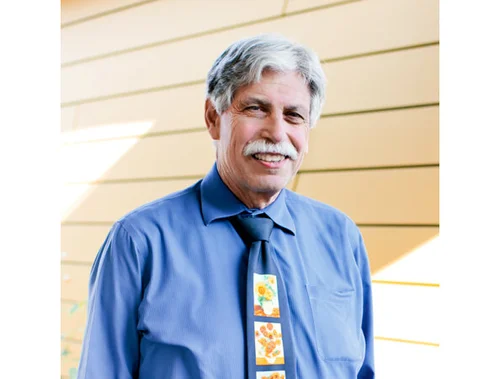
Gilbert F. Gelfand, M.D.
Board-Certified Rheumatologist · FACP · FACR Clinical Professor of Medicine, USC Keck School of Medicine · Chief of Rheumatology, Rancho Los Amigos Medical CenterDr. Gelfand has been treating patients in the Whittier and Southeast LA area for over 30 years. He trained at Maimonides Medical Center and did his rheumatology fellowship at Long Island College Hospital, with rotations at the Hospital for Special Surgery at Cornell. He's also a Certified Clinical Densitometrist and has extensive experience with osteoporosis. He speaks English and Spanish.
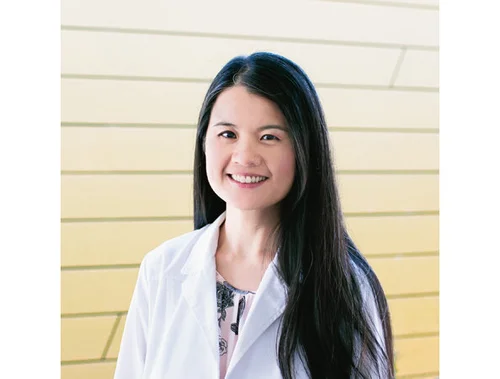
Tien-I Karleen Su, M.D., FACR
Board-Certified Rheumatologist · Co-Founder UCLA School of Medicine · USC Rheumatology Fellowship · Chair, ACR Community Practice Council · Founder, RPPADr. Su co-founded Amicus and has been seeing patients here for over ten years. She went to UCLA for medical school — where she was elected into the Alpha Omega Alpha Honor Society — and did her rheumatology fellowship at USC. She's the chair of the ACR Community Practice Council and runs several clinical studies on RA, lupus, and psoriatic arthritis. She speaks English, Spanish, and Mandarin.
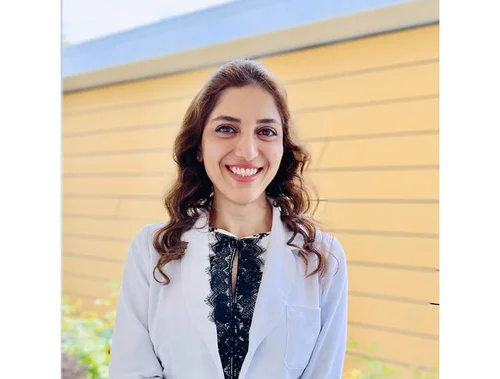
Susan Mansourian, M.D., FACR
Board-Certified Rheumatologist · FACR Summa Cum Laude, Debrecen Medical School · Rheumatology Fellowship, University of KentuckyDr. Mansourian graduated summa cum laude from Debrecen Medical School in Hungary, completed her internal medicine residency at Rochester Regional Health, and then did her rheumatology fellowship at the University of Kentucky. She's known for taking time with her patients and for her careful, individualized approach — especially with complicated or hard-to-diagnose cases. She speaks English and Farsi.
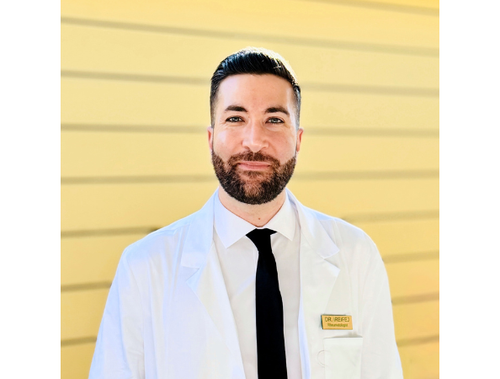
Branden Ireifej, M.D.
Board-Certified Rheumatologist UC Riverside · AUA College of Medicine · Rheumatology Fellowship, USC / LA General Medical CenterDr. Ireifej grew up in Southern California, trained at USC and LA General, and came back home to practice. He treats RA, lupus, psoriatic arthritis, gout, and vasculitis. In 2024 he received the ARP President's Choice Award at the ACR annual meeting. He's big on explaining things clearly and making sure patients understand their options before deciding anything.
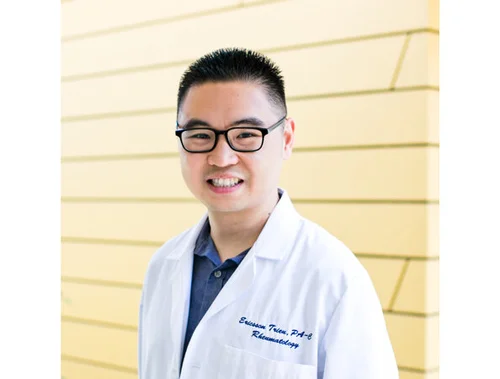
Ericsson Trieu, PA-C
Board-Certified Physician Assistant UCLA — Physiologic Science · With Amicus since 2017Ericsson graduated from UCLA, spent two and a half years working as an EMT in LA and Orange counties, then went through PA training before joining Amicus in 2017. He started in primary care, so he's used to thinking about the whole patient. People describe him as thorough and easy to talk to. He speaks English, Cantonese, and Spanish.
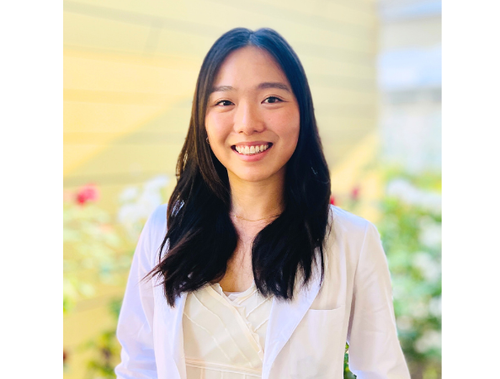
Julie Huang, PA-C
Board-Certified Physician Assistant UC Irvine — Biological Sciences · Western University PA Program · With Amicus since 2024Julie joined Amicus in 2024 after completing her PA training at Western University in Pomona. She's from the Bay Area originally, went to UC Irvine, and is genuinely passionate about helping patients understand what's going on with their health and what they can do about it. She speaks English and Cantonese.
What's Different About Amicus
You won't wait four months. Big hospital rheumatology programs in LA often can't see new patients for three to four months. We're a smaller practice and we move faster — especially if you're dealing with active joint swelling that needs attention now.
You see the same doctor every time. No residents, no hand-offs. Whoever you see on your first visit is who you'll see on your fifth. They'll know your story, your labs, and what's worked and what hasn't.
We're independent. We're not part of a hospital system with financial incentives or referral quotas. We just decide what's best for you based on your situation.
We keep it affordable. We accept most major insurance plans and we're genuinely conscious of cost. Good rheumatology care shouldn't only be accessible to people who can afford Cedars-Sinai prices.
We handle complicated cases. Seronegative RA, overlap syndromes, psoriatic arthritis that was misdiagnosed for years, patients who've been through three biologics without remission — this is not unusual for us. We figure it out.
We explain things clearly. If we recommend a medication, we tell you what it does, what to watch for, and why we chose it over the alternatives. You make the decision, but you make it knowing the full picture.
We have Spanish-speaking staff. Several of our medical assistants and doctors speak Spanish. A significant part of our patient population is Spanish-speaking, and we want those patients to feel fully understood.
We run clinical trials. If standard treatments haven't worked, we may have a study you qualify for. It's not the right fit for everyone, but it's worth asking about.
Amicus vs. Other Options Near Los Angeles
If you're weighing your options, here's an honest comparison of what you'll typically find at different types of practices in the LA area.
| What matters to you | Amicus Arthritis | Hospital Systems (UCLA, Cedars) |
Other Private Practices |
|---|---|---|---|
| New patient wait time | ✓ Weeks, not months | ⚠ Often 3–4 months | ⚠ Varies |
| Time spent at each visit | ✓ Unhurried | ✗ Often rushed | ⚠ Varies |
| Insurance & cost | ✓ Most major plans | ✗ Higher costs | ⚠ Varies |
| Clinical trial access | ✓ Active program | ✓ Extensive | ✗ Rarely |
| Spanish-speaking staff | ✓ Yes | ⚠ Limited | ✗ Rarely |
| Same doctor every visit | ✓ Always | ⚠ Rotating residents | ✓ Usually |
| Location for SE LA / SGV | ✓ Whittier — easy drive | ✗ Westside traffic | ⚠ Various |
| Independent practice | ✓ Fully independent | ✗ Institution-driven | ✓ Yes |
What People Say After Coming In
"I drove from East LA and it was completely worth it. My last rheumatologist spent maybe seven minutes with me. Here, my first visit was over an hour. They actually explained what was happening in my joints, and the biologic we started has changed everything."
"Two years of flares and nobody could figure it out. Turns out I have seronegative RA — bloodwork kept coming back normal so other doctors dismissed it. Amicus dug in and found it. I've been in remission for over a year now."
"UCLA couldn't see me for four months. Amicus got me in within two weeks — my hands were so swollen I could barely hold anything. The care is excellent and the cost is reasonable. I send everyone I know here."
Rheumatologist Near Me — Communities We Serve
Our office is in Whittier, which puts us within easy reach of most of Southeast Los Angeles and the San Gabriel Valley. If you've been searching for a rheumatologist near you in any of these areas, you're probably closer than you think.
East Los Angeles
About 15 miles on the 60 — roughly 20 minutes in light traffic.
Downey & Norwalk
10–12 miles southeast. Quick on the 605 or I-5.
Pasadena & SGV
About 20–25 miles via the 60. We see a lot of patients from this area.
Commerce & Montebello
8–10 miles away — one of the closest rheumatology options for these communities.
Pico Rivera & Santa Fe Springs
Just 5–8 miles north. Often the most convenient board-certified option nearby.
Long Beach Area
About 15–20 miles on the 605 south. A real alternative to waiting months at a hospital system.
FAQ — Rheumatoid Arthritis Near Los Angeles
Where can I find a rheumatoid arthritis doctor near Los Angeles?
We're at 12456 Washington Blvd in Whittier — about 15 to 20 miles southeast of downtown LA. Most patients from East LA, Pasadena, Downey, Norwalk, and the San Gabriel Valley reach us in 20 to 30 minutes. We tend to get people in faster than hospital-based programs, which often have multi-month waits.
What are the first signs of rheumatoid arthritis?
The most common early signs are joint pain and swelling in both hands or both feet, morning stiffness that takes more than half an hour to loosen up, and a kind of deep fatigue that doesn't go away. The "both sides" pattern is the key thing — if one wrist hurts, that could be anything. If both wrists hurt at the same time, that's more likely RA. If any of this sounds familiar, it's worth getting checked sooner rather than later.
Is rheumatoid arthritis curable?
Not yet — but the treatment has gotten really good. Most people on the right medication reach remission, meaning their inflammation is under control, their joints stop getting worse, and they feel like themselves. The earlier you start, the better the long-term outcome. We've seen patients go from being unable to open a jar to hiking on weekends. It takes time and the right treatment, but it's very much possible.
Do I need a referral to see a rheumatologist near me?
Depends on your plan. PPO plans generally don't require one — you can book directly. HMO plans usually do need a referral from your primary care doctor first. Call us at (562) 758-6600 and we'll figure it out with you before your visit so there are no surprises.
What's the difference between RA and regular arthritis?
Most people mean osteoarthritis when they say "arthritis" — that's the wear-and-tear kind that tends to happen with age, usually in the hips and knees. Rheumatoid arthritis is completely different. It's your immune system attacking your own joints. It can happen at 35. It causes systemic symptoms like fatigue and fever. And it needs different treatment entirely — not just anti-inflammatories, but medications that actually modify what the immune system is doing.
How long does it take to get an appointment?
It varies by season, but we're generally much faster than hospital rheumatology programs. If you're dealing with active joint swelling, tell us that when you call — we try to prioritize people who are clearly in a flare. Call us at (562) 758-6600 and we'll tell you honestly what we're looking at.
Do you have Spanish-speaking staff?
Yes. Several of our medical assistants speak Spanish, and Dr. Gelfand and Dr. Su both speak Spanish as well. We also have a Spanish-language section on our website. A big part of our patient community in Southeast LA is Spanish-speaking, and we want people to feel fully understood — not just translated.
What insurance do you accept?
We work with most major insurance plans. The best way to confirm is to call us at (562) 758-6600 or email contact@AmicusArthritis.com with your insurance information. We'll check your benefits and let you know about any referral requirements before you come in.
Ready to Get Checked Out?
If your joints have been bothering you for weeks, or you got a positive RF and don't know what to do next, call us. We'll take a look at what's going on, run the right tests, and give you a straight answer. Patients from East LA, Pasadena, Downey, and all over the San Gabriel Valley find us worth the drive.